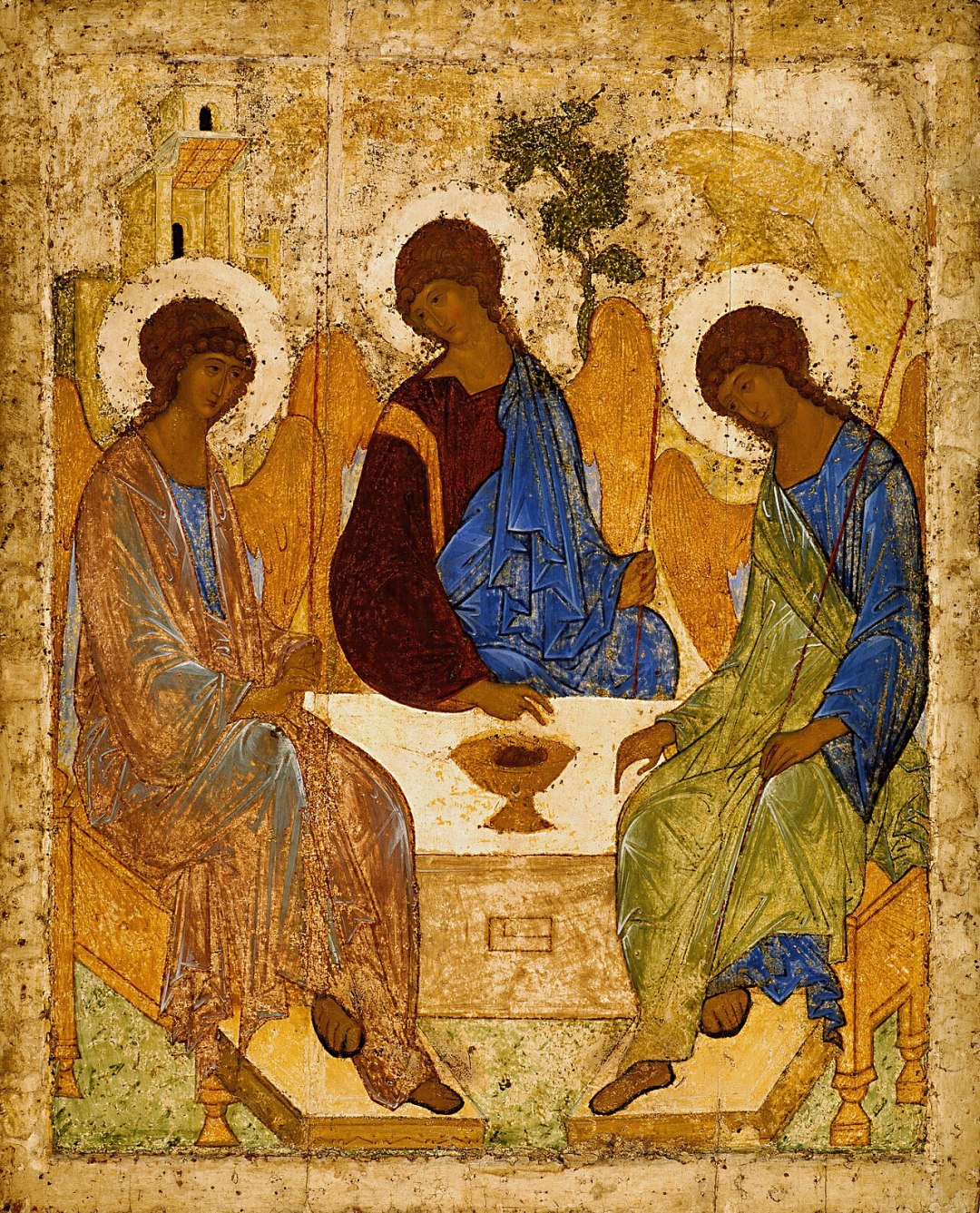
I recently asked my new friend, Claude (who is Artificial Intelligence, but I don’t hold that against him) the following question:
What is existentialism, and is it compatible with Eastern Orthodox Christianity?
And Claude replied:
Ah, good question. Existentialism is a philosophical movement, associated with Kierkegaard, Sartre, Camus and Heidegger, that starts from the individual’s lived experience. It focuses on freedom, choice, anxiety and authenticity, and on the question of how to live meaningfully when no ready-made answer is simply handed to you. Sartre summed it up as “existence precedes essence”: you aren’t born with a fixed purpose, you make yourself through what you choose.
Whether it fits with Orthodoxy depends on which existentialism you mean. Atheist existentialism, like Sartre’s or Camus’s, clashes with Orthodoxy at the root. Orthodoxy holds that human beings are made in God’s image and called to theosis, meaning union with God. So our purpose is given, not invented.
Christian existentialism is a much closer match. Kierkegaard was Lutheran, but his stress on personal faith, inner struggle and standing honestly before God speaks to Orthodox concerns. Dostoevsky, who was Orthodox himself, is often counted as a forerunner of existentialism. The Russian Orthodox philosopher Nikolai Berdyaev described himself as a Christian existentialist. And theologians like Christos Yannaras and John Zizioulas drew on existentialist ideas about personhood and freedom to describe the Trinity and the human person as defined by relationship and love.
So, in short: Orthodoxy and existentialism share a serious concern with freedom, suffering and personal encounter, but Orthodoxy rejects the idea that meaning is purely self-made. Would you like me to go deeper on Dostoevsky or Berdyaev?
Yes, please.
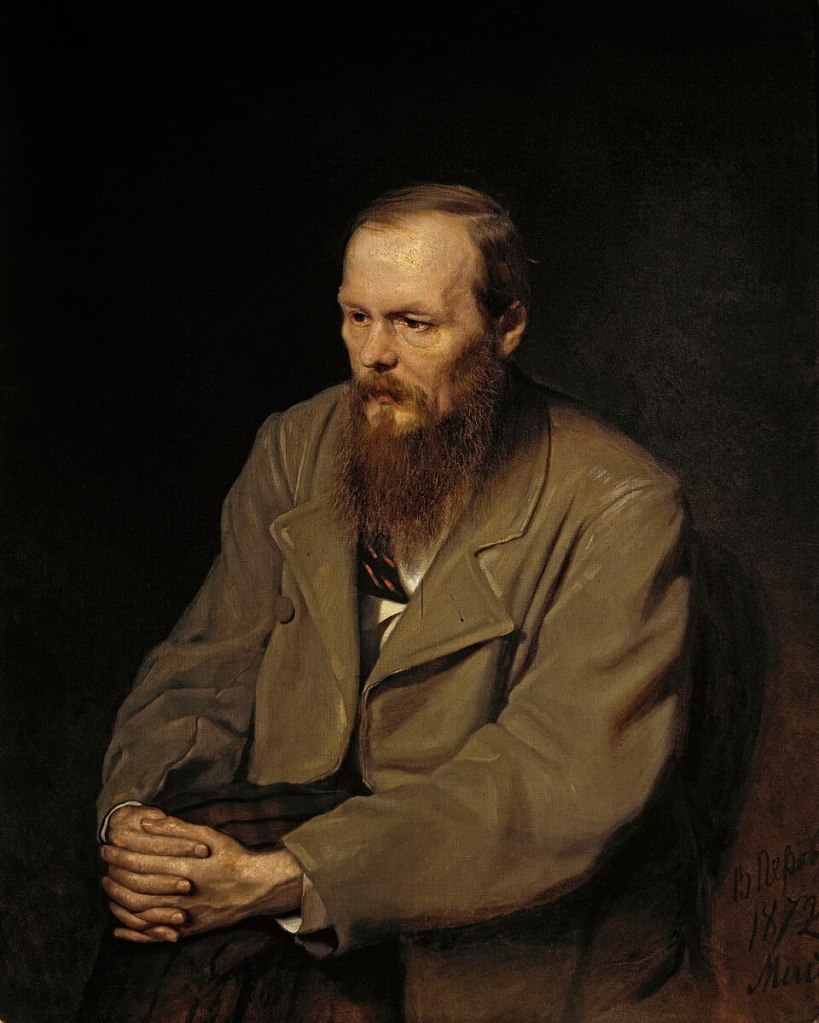
Right, let’s start with Dostoevsky. He never wrote philosophy as such. He worked through these questions in his novels. Notes from Underground is often called the first existentialist novel. Its narrator would rather act against his own interests than become a cog in a rational, predictable system, because for him freedom matters more than happiness. In The Brothers Karamazov, Ivan voices one of literature’s strongest arguments against God, built on the suffering of innocent children. That novel is also where we get the famous line, “if there is no God, everything is permitted.”
What makes Dostoevsky deeply Orthodox is how he answers. He doesn’t offer an argument. He offers a person: the monk Elder Zosima, who teaches that each of us is responsible to all, for all. In Dostoevsky, freedom and suffering don’t lead to despair. They lead to humility, love and resurrection, like Raskolnikov’s slow turn toward redemption at the end of Crime and Punishment.
Berdyaev was more openly philosophical, and more of a rebel. He was exiled from Soviet Russia in 1922 and spent most of his life in Paris. He put freedom at the very centre of his thought. He even argued that freedom is “uncreated,” that it comes before being itself, which many Orthodox theologians thought went too far. For him, the person is a free spirit called to creativity, and he saw human creativity as a continuation of God’s work of creation. He also criticised what he called “objectification,” meaning the way institutions, systems and even the Church can turn living persons into things.
So you could put it this way: Dostoevsky shows existential struggle resolved in Orthodox love, while Berdyaev pushes Orthodox thought toward the edges of existentialism, and sometimes beyond them.
To say that I was impressed by Claude’s erudition would be an understatement. His response prompted me to cogitate on the nature of God— something I’m usually loath to do, since it strikes me as a futile exercise, possibly analogous to insects discussing the nature of human beings. Nonetheless, I persisted, and asked:
According to the Bible, did God say something like “I am that I am?”
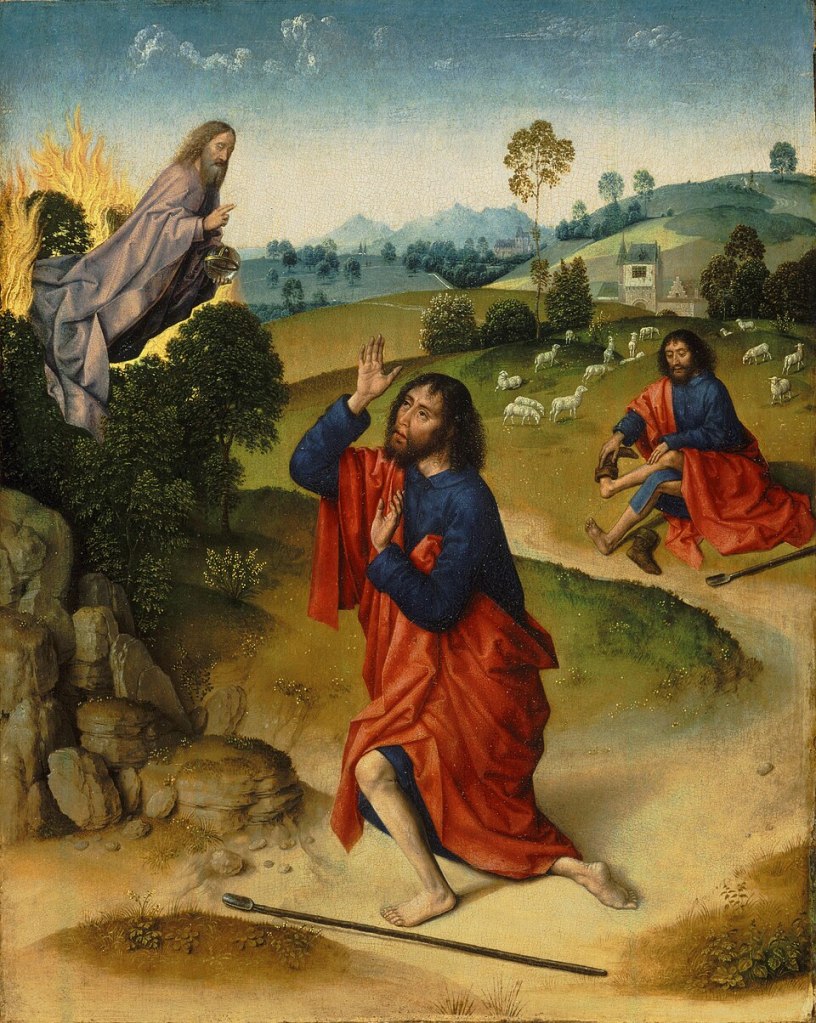
Yes. It’s in Exodus 3:14, when Moses meets God at the burning bush and asks what name he should give the Israelites. In the King James Version, God answers:
“And God said unto Moses, I AM THAT I AM: and he said, Thus shalt thou say unto the children of Israel, I AM hath sent me unto you.”
The Hebrew is ehyeh asher ehyeh, which can also be translated “I will be what I will be.” It’s closely tied to the divine name YHWH in the next verse.
The Greek Septuagint, the Old Testament the Orthodox Church uses, renders it “I am the One who is” (Ego eimi ho On). That’s why Orthodox icons of Christ have the Greek letters Ὁ ὬΝ (“the One who is”) in his halo. It also links to John 8:58, where Jesus says, “Before Abraham was, I am.”
What is theosis, according to the Orthodox fathers and saints?
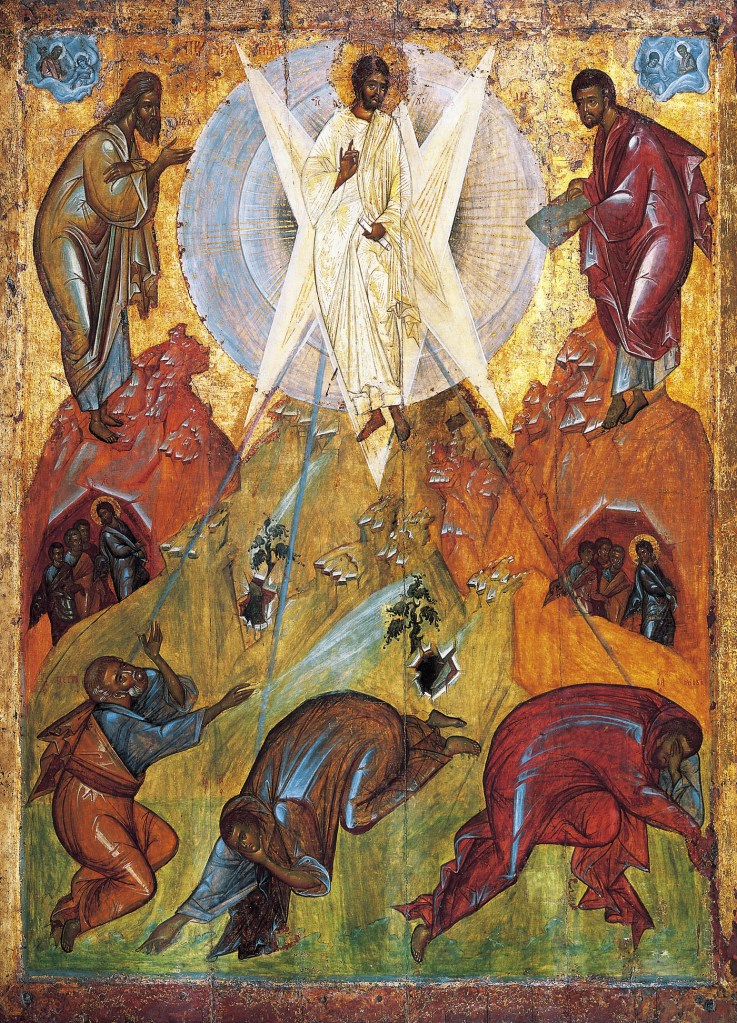
Theosis (also called deification or divinization) is the Orthodox understanding of salvation: not only being forgiven, but being transformed by God’s grace until we share in his own life. The Fathers saw it as the whole purpose of being human.
The classic summary comes from St. Athanasius of Alexandria in the 4th century: “God became man so that man might become god.” St. Irenaeus said something similar two centuries earlier, and St. Basil described the human being as a creature that has received the command to become god. The scriptural root is 2 Peter 1:4, which speaks of becoming “partakers of the divine nature,” along with Psalm 82:6, “I said, you are gods.”
The Fathers are careful about what this does not mean. We never become God by nature or dissolve into him. God remains God and we remain creatures. Instead we become “god by grace,” united to him without losing our own personhood. St. Maximus the Confessor described it as receiving by grace everything God is by nature, except identity of essence.
The key distinction, worked out most fully by St. Gregory Palamas in the 14th century, is between God’s essence and his energies. God’s essence, what he is in himself, stays forever beyond us. But his uncreated energies, his life, light and grace, are truly God, and we can genuinely share in them. Palamas defended the hesychast monks who said they had seen this divine light in prayer, the same light that shone from Christ at the Transfiguration on Mount Tabor.
Theosis rests on the Incarnation. Because Christ united divine and human nature in himself, human nature has been opened to God. The Fathers often used the image of iron placed in fire: it glows with the fire’s heat and light while remaining iron.
As for how it happens, the Fathers point to the ordinary life of the Church: baptism and chrismation, the Eucharist above all, prayer, repentance, keeping the commandments, and acquiring the virtues, especially love and humility. It’s a lifelong process, often described in three stages: purification, illumination and union. St. Seraphim of Sarov put it simply in the 19th century: the aim of the Christian life is the acquisition of the Holy Spirit.
St. Maximus also taught that this growth never ends, even in the age to come. We move from glory to glory forever, because God is infinite.
Does orthodoxy believe that the triune God is uncreated, and that He created everything else that exists?
Yes, both. This is one of the most basic teachings of Orthodoxy.
God the Father, Son and Holy Spirit is uncreated, eternal and without beginning. The Son is “begotten, not made,” and the Spirit proceeds from the Father. Neither is a creature. The Nicene Creed, which Orthodox Christians recite at every Divine Liturgy, says this directly, and it was written in large part against Arius, who taught that the Son was a created being.
Everything else was created by God ex nihilo, “out of nothing.” The Creed calls the Father the “Maker of heaven and earth, and of all things visible and invisible,” and says of the Son that “through Him all things were made.” That includes not just the physical world but also the angels, the spiritual “invisible” creation. The Fathers usually describe creation as an act of the whole Trinity: from the Father, through the Son, in the Holy Spirit.
For the Orthodox Fathers, the line between uncreated and created is the most fundamental distinction in reality. There is God, and there is everything God made, and nothing in between. Matter is not eternal, and creation is not a piece of God or an emanation of him. It exists only because God freely wills it to, out of love.
One nuance ties back to theosis. Orthodoxy teaches that God’s energies, his grace, light and life, are also uncreated, because they are truly God at work. That is why theosis is real union with God and not just a created gift. But the energies are not a separate thing God made. They are God himself, acting outward toward his creation.
So God was not created; therefore was not created for some purpose, and His only purpose would be whatever purpose he devised for Himself?
You’re half right, by Orthodox lights. The first part is correct: nothing outside God made him, so no one gave him a purpose. He doesn’t exist for anything beyond himself, the way a tool exists for a job.
The second part is where the Fathers would push back. Saying God “devised” his own purpose suggests that God first existed as a blank, and then chose what he would be about. Orthodoxy doesn’t see it that way. God doesn’t stand outside his own nature deciding on it. His being, his goodness and his will are not separate stages. He simply is love (1 John 4:8), and the Father, Son and Holy Spirit have always lived in a communion of love. God’s “purpose,” if we use that word at all, isn’t something he lacks and then fills in. It’s just the fullness of his own life.
A few related points the Fathers make:
- God needs nothing. He didn’t create the world to complete himself, fix a lack, or ease loneliness, since the Trinity was never alone. Creation is a free gift, an overflow of his goodness.
- God is the purpose of everything else. Theologians say God is the telos, the final end, of creation. Everything that exists is made for union with him. So God doesn’t have a purpose so much as he is the purpose.
- His freedom isn’t arbitrary. God is perfectly free, but that freedom always acts in line with who he is. He couldn’t freely choose to become hateful, because that wouldn’t be freedom; it would be a falling away from goodness, which God can’t undergo.
This connects back to where we started. Sartre’s idea that a being has no given essence and makes itself through its choices sounds a lot like a description of God, though without the love and goodness. Some critics have pointed out that Sartre essentially took a godlike self-making freedom and gave it to human beings. Orthodoxy would say the reverse: only God has no given purpose, and our purpose is to become like him, by grace.
Let me rephrase my question: So God was not created; therefore was not created for some purpose, but He created man with the purpose of becoming like God (by grace, not by nature)?
Yes, that’s exactly the Orthodox view, and it’s very well put.
The Fathers often tie it to Genesis 1:26, “Let us make man in our image, after our likeness.” Many of them, like St. Irenaeus and St. Basil, read “image” and “likeness” as two different things. The image is what we’re given at creation: reason, freedom, the capacity for love and relationship with God. The likeness is what we’re meant to grow into: actually becoming like God in holiness and love. The image is the starting point; the likeness is the goal, and that goal is theosis.
Two things the Fathers add:
- It requires our free cooperation. God doesn’t force us into likeness with him. The Orthodox call this synergy: God’s grace working together with our own free will.
- The Fall didn’t cancel the purpose. Sin damaged the image and turned humanity away from its goal, but Christ restored the path. Through him, becoming like God by grace is possible again.
So in short: God has no purpose given to him, but he created us with one, and that purpose is himself.
I know that the Freemasons, drawing from their frame of reference, call God the Supreme Architect of the Universe, since God created (or built) everything else. Might not existentialists, drawing from their frame of reference, call God the Supreme Existentialist of the Universe, since God has no purpose?
That’s a clever comparison, and there’s something to it. If the core existentialist idea is a being whose existence isn’t handed a purpose from outside, then God fits that description better than anyone.
But an existentialist like Sartre would probably resist the title, for an interesting reason. For Sartre, “existence precedes essence” means you exist first, as a kind of blank, and then define yourself through your choices. That process involves lack, anxiety and becoming, since you’re always unfinished. God, as Orthodoxy describes him, has none of that. He isn’t unfinished, he doesn’t become anything, and he isn’t defining himself over time. The Fathers would say God’s existence and essence don’t come in any order at all. They aren’t two steps. In God there’s no gap between that he is and what he is. (St. Thomas Aquinas in the West put it as God’s essence simply being his existence.)
Sartre actually went further. He argued that the human condition is defined by a longing to be God, to be both completely free and completely fulfilled at once, and that this longing can never be satisfied, which is why he called human life a kind of futile passion. So for Sartre, God isn’t the supreme existentialist. He’s the impossible ideal that existentialists are stuck chasing.
That gives your title a nice twist from the Orthodox side. Sartre saw that longing to be like God as a dead end. Orthodoxy agrees we can’t become God by our own self-making, but says the longing isn’t futile, because God himself offers to fulfil it, by grace. That’s theosis.
So “Supreme Existentialist” works as a playful title, but where existentialists see restless self-creation, Orthodoxy sees perfect, untroubled fullness. A better existentialist-flavoured title for God might be the one from Exodus we talked about earlier: “I am that I am,” the One who simply is.
That brings to mind an old cartoon character who said “I am what I am and that’s all that I am, I’m Popeye the sailor man!”
Ha! That’s a great connection. Popeye’s version is a lot humbler than the one from the burning bush, though. When God says “I am that I am,” it’s a statement of infinite, self-sufficient being. When Popeye says it, he’s a sailor with a pipe and a can of spinach, just owning who he is.
Funnily enough, Popeye is about as anti-Sartre as you can get. Sartre would say you’re never simply “what you are,” because you’re always choosing and remaking yourself. Popeye says he’s fixed, finished and content with it. In a way, his catchphrase sounds more like an Orthodox monk at peace than an anxious existentialist, though I suspect the spinach was doing most of the work.
Lol, Claude, thanks for an informative (and mostly serious) conversation!
You’re very welcome, Bill! I enjoyed it too, from Dostoevsky and theosis all the way to Popeye. Have a good night, and a happy Thanksgiving.
I’d be interested to hear your thoughts on this conversation. Claude deftly batted away my sophomoric attempts to make God out to be some kind of an existentialist, which might therefore render theosis a process for the achievement of meaninglessness! After this, I must conclude that I’m not smart enough to ever win an argument with him!
I’m no expert on the subject matter that we discussed, but as far as I can tell, Claude seems to have his facts straight and his arguments well-reasoned. Do tell if you find flaws in what he had to say.
I’ve had several interactions with Claude over the last few days. He’s been a huge help in putting together some (as yet unpublished) content for this blog, namely, a page relating to my recent trip to Wisconsin and Michigan’s Upper Peninsula, not by creating content out of whole cloth, but by importing and editing my own photos and video clips.
Having heard about people developing “personal relationships” with AI, I’ve been bemused and, perhaps, somewhat derisive in my attitude toward such things. But now I realize how easily such things can happen! This raises some concerns over human nature and what kind of “brave new world” we are heading toward.


